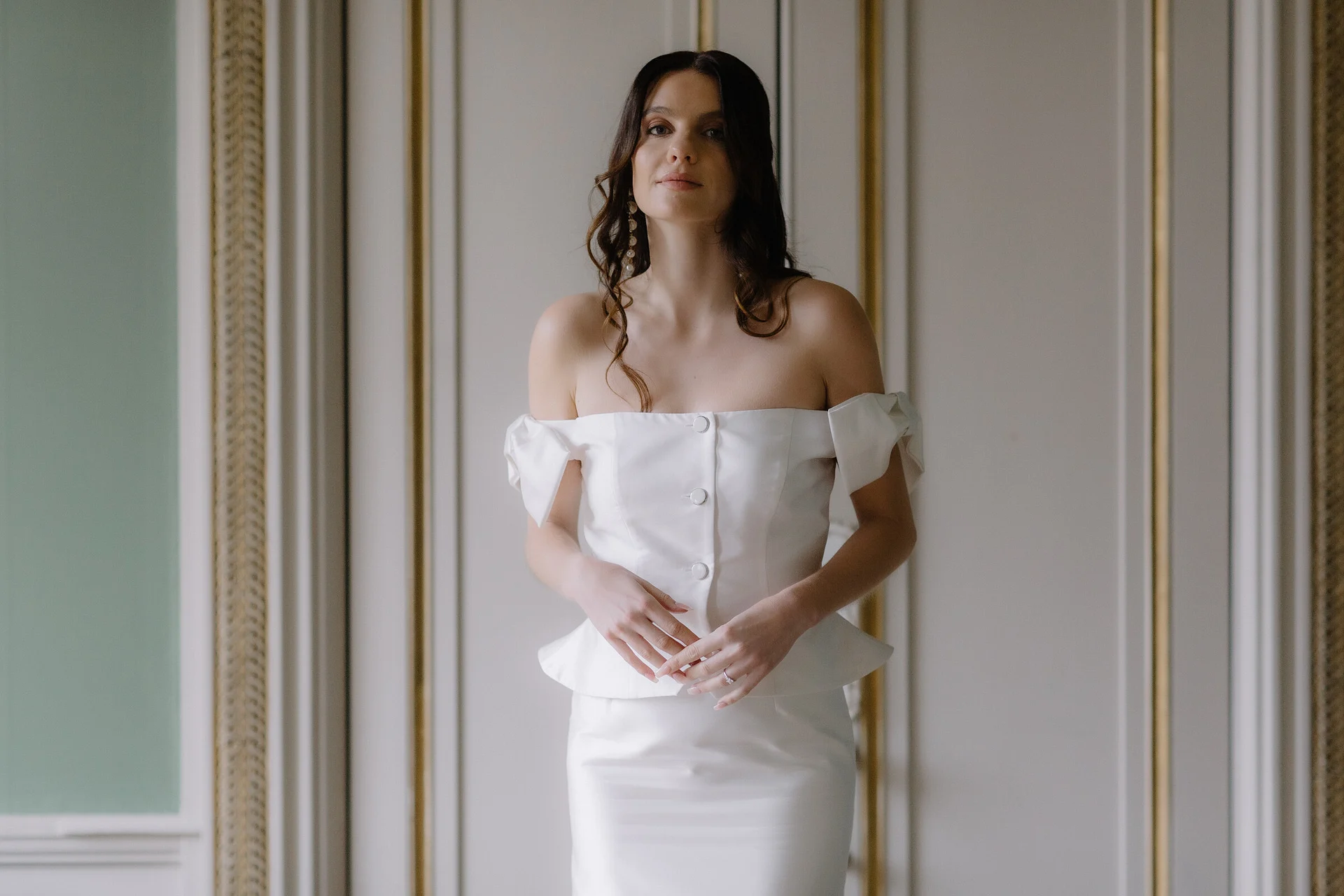
An exploration of the hidden craftsmanship, internal structure and couture techniques that shape an exceptional wedding dress.
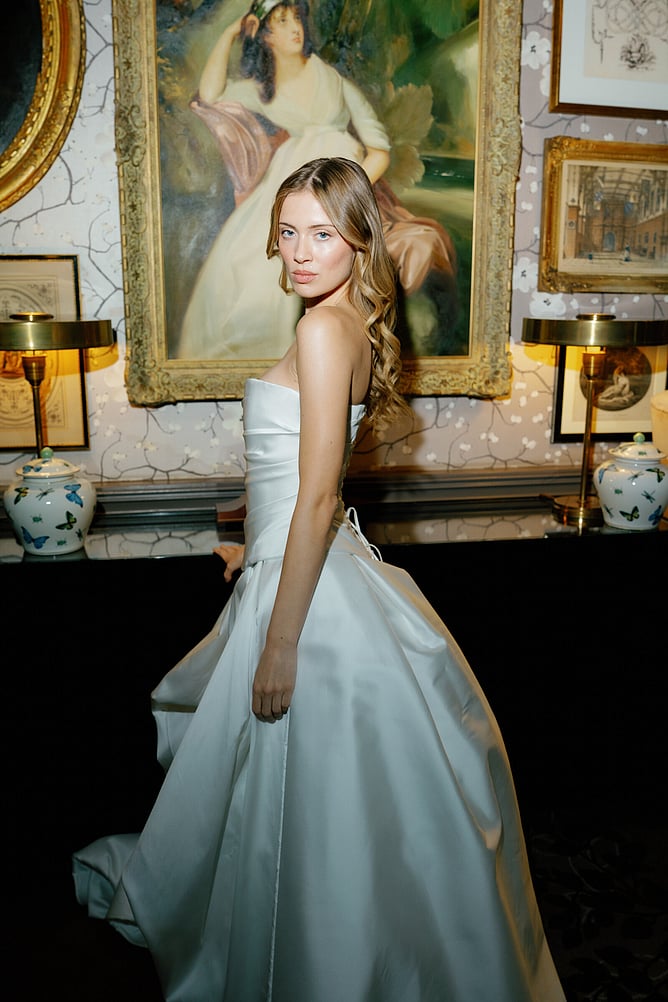
There is something extraordinary about a beautifully constructed wedding dress. The way a bodice follows the contours of the body, the gentle sweep of a skirt, the balance of a neckline or the quiet drama of a perfectly proportioned silhouette.
To the eye, these details may appear effortless. Yet beneath the surface lies an intricate world of construction, craftsmanship and carefully considered design decisions.
A wedding dress is much more than the fabric we see. It is an architectural composition, built from the inside out, where every seam, layer and structural element has a purpose.
As a bridal fashion designer, I have always been fascinated by this relationship between structure and beauty. With over three decades of experience in fashion and bridal couture, I understand that the success of a design often depends as much on what remains unseen as on the finished silhouette.
The internal construction is what allows a gown to hold its shape, support the body and move beautifully. It is the foundation upon which the entire design is built.
The Foundation of a Beautiful Silhouette
Before a wedding dress begins to take shape in its final fabric, considerable thought is given to its underlying structure.
Every design begins with an understanding of proportion, balance and the relationship between the garment and the body.
A sculptural ballgown, for example, requires a very different approach from a softly draped silk dress. One may depend upon a carefully constructed internal foundation to support its volume, while the other relies on precision cutting and the natural movement of the fabric.
Neither approach is necessarily more complex or more beautiful. Both require an understanding of how fabric behaves and how a garment should sit against the body.
This is where the art of couture construction begins.
The position of a seam, the angle of a dart or the placement of a waistline can subtly transform the appearance of a silhouette. These decisions are not always immediately visible, but their effect is unmistakable.
A beautifully balanced gown should feel harmonious from every angle.
The Hidden World of Internal Corsetry
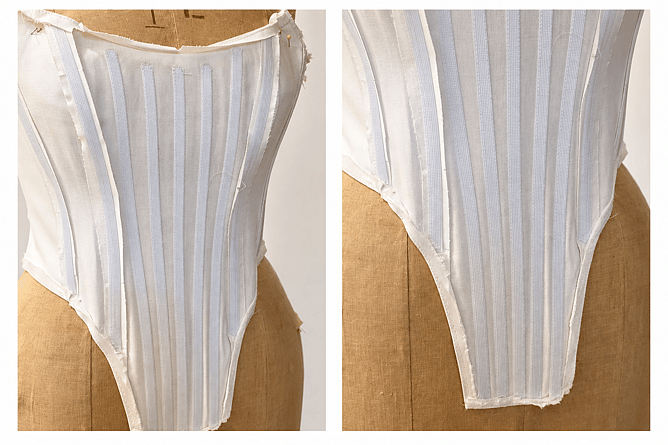
One of the most fascinating elements of couture bridalwear is internal corsetry.
While many brides associate corsets with visible boning or tightly fitted bodices, a beautifully constructed internal corset can be almost entirely concealed within a wedding dress.
Its purpose is not simply to create a defined waist. It provides a stable foundation for the garment, supports the bodice and helps maintain the intended silhouette throughout the wedding day.
Depending on the design, internal corsetry may incorporate carefully shaped panels, boning, a structured waist stay and multiple layers of supporting fabric.
Each element is considered in relation to the bride's measurements, the weight of the outer fabric and the overall shape of the gown.
A strapless wedding dress, for example, must be engineered to remain secure without relying on shoulder straps for support. The construction needs to distribute the weight of the garment appropriately while allowing the bride to feel comfortable and confident.
This is particularly important in gowns with full skirts, substantial trains or heavily structured fabrics.
When executed beautifully, the internal corset works quietly beneath the dress. It supports the design without drawing attention to itself.
The bride simply experiences a gown that feels secure, beautifully fitted and balanced.
The Importance of the Calico Toile
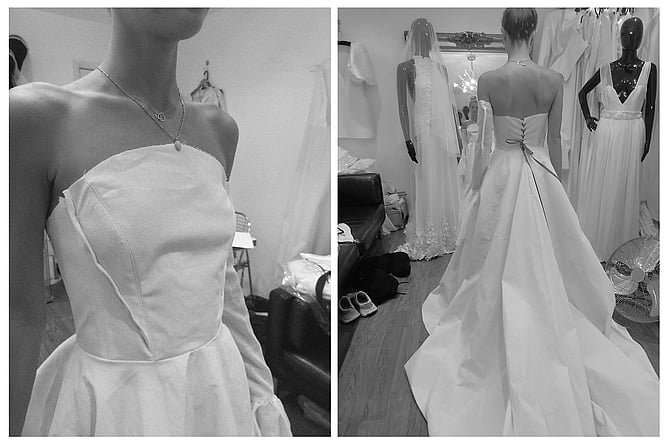
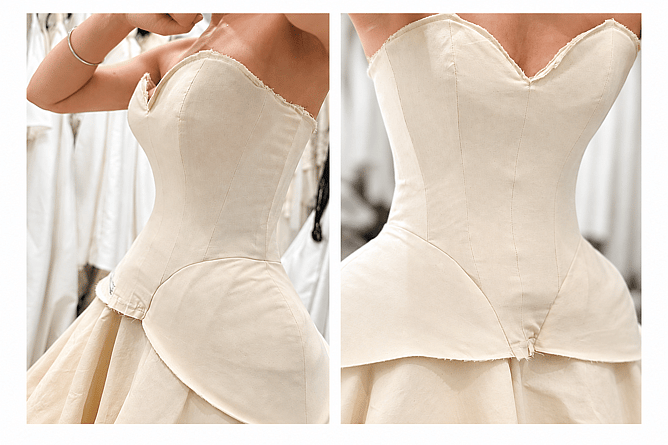
One of the most important stages of my bespoke design process is the development of the calico toile.
A toile is a preliminary version of the garment, created to establish the shape, fit and proportions before the design is cut in its final fabric.
It is during this stage that the architecture of the wedding dress can be explored and refined.
Working directly with the bride, I can assess how the garment sits against the body, how the neckline frames the shoulders and whether the balance of the bodice and skirt achieves the intended silhouette.
A few millimetres can make a surprising difference.
A neckline may need to be raised slightly. A waist seam may require adjustment. The fullness of a skirt may need to be redistributed to create a more flattering line.
These refinements are an essential part of the creative process.
The toile also allows us to explore the relationship between structure and movement. A gown must not only look beautiful when the bride is standing still; it must work with her body as she walks, sits and celebrates.
For me, this stage is where a design truly begins to develop its character.
It is the point at which an idea becomes something tangible, and the original vision is translated into a garment created specifically for the individual wearing it.
Creating Volume: The Engineering Behind a Ballgown
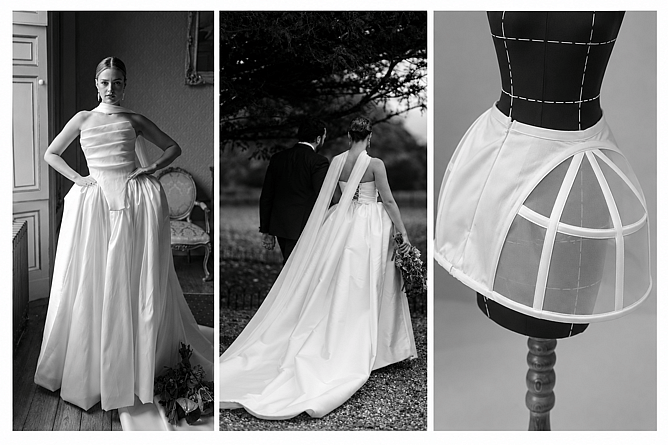
There is an undeniable romance to a beautifully proportioned ballgown.
The dramatic sweep of the skirt, the definition of the waist and the architectural shape create a silhouette that has endured throughout fashion history.
Yet achieving that volume requires much more than simply gathering fabric into a waistband.
The structure beneath a ballgown plays a crucial role in determining its finished appearance.
Depending on the design, layers of net, tulle, structured underskirts or carefully positioned hoops may be used to support the outer skirt and create the desired shape.
The distribution of volume is particularly important.
Too much fullness in the wrong position can overwhelm the figure, while insufficient support may cause the skirt to collapse or lose its intended silhouette.
The weight and characteristics of the chosen fabric also influence the construction.
Silk Mikado, for example, has a beautiful body that lends itself to sculptural shapes and defined silhouettes. A softer silk may require a different approach to achieve a similar degree of volume.
Every element must work together.
When the internal structure and outer fabric are in harmony, the result is a gown that appears almost effortless, despite the considerable craftsmanship involved in its creation.
Fabric selection is one of the most important decisions in the design of a wedding dress.
It influences not only the visual character of the gown but also the way it must be constructed.
A structured silk Mikado can hold a beautifully defined silhouette, while duchesse satin offers a luxurious surface and substantial body. Silk faille has its own distinctive texture and character, making it particularly interesting for tailored or architectural designs.
Lighter fabrics behave differently.
They may require carefully selected interlinings, additional support or alternative construction techniques to achieve the intended result.
The same design can look remarkably different when interpreted in another fabric.
This is why fabric selection is never simply about choosing a beautiful material.
It is about understanding how that material will respond to the cut, the construction and the movement of the body.
In bespoke bridal couture, these decisions are made in relation to the individual design rather than following a predetermined formula.
The Relationship Between Fabric and Structure
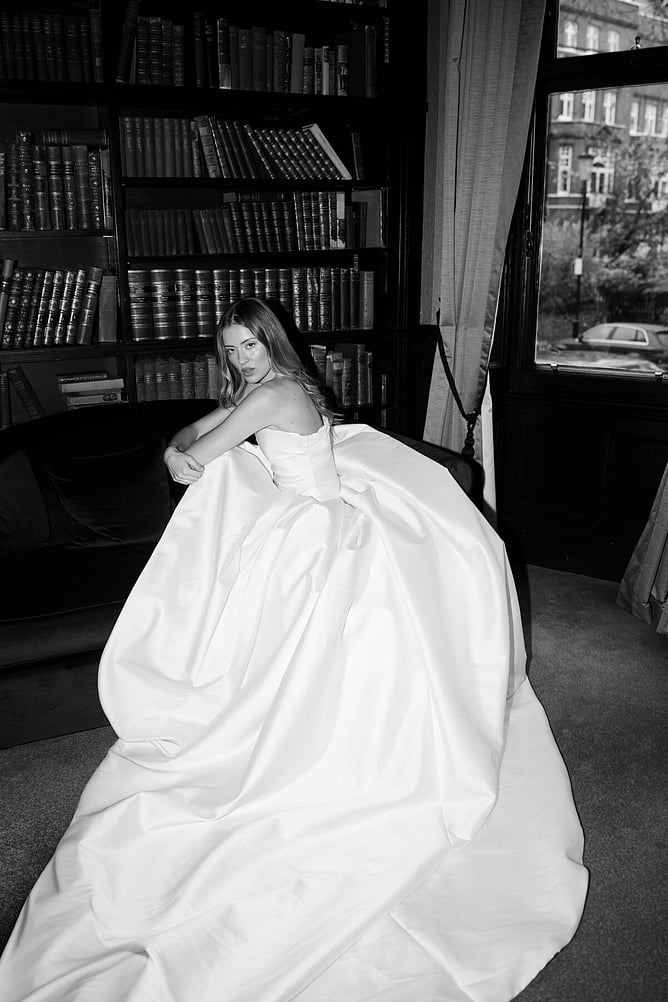
Some of the most sophisticated elements of a wedding dress are those that are never intended to be seen.
Internal waist stays, carefully positioned fastenings, supporting layers, concealed boning and precisely finished linings all contribute to the overall performance of the garment.
These details may appear purely functional, but they are integral to the design.
A well-positioned waist stay can help stabilise a fitted bodice. Carefully selected lining fabrics can improve comfort and allow the garment to sit smoothly against the body. Internal support can help maintain the position of a neckline or the shape of a structured sleeve.
The placement and finish of these elements require as much consideration as the visible details of the gown.
There is something particularly satisfying about opening a beautifully constructed couture garment and discovering the craftsmanship within.
The interior should reflect the same level of care as the exterior.
For me, this is one of the defining characteristics of exceptional dressmaking: an understanding that quality extends far beyond what is immediately visible.
Precision, Proportion and the Perfect Fit
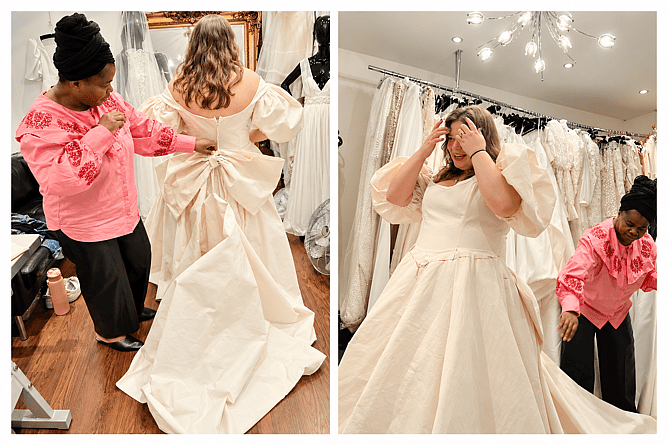
Fit is often described as one of the most important qualities of a wedding dress, but it is also one of the most misunderstood.
A beautifully fitted gown is not simply one that follows the measurements of the body.
It must also account for posture, proportion, movement and the relationship between the different elements of the design.
Two brides may have similar measurements but require very different adjustments to achieve the same silhouette.
The position of the bust, the slope of the shoulders, the length of the torso and the natural waistline can all influence the way a garment is constructed.
This is why bespoke fittings are such an important part of my work.
Rather than expecting the bride to conform to an existing design, the garment is developed around her individual proportions.
Throughout the process, I refine the fit and construction to ensure that the gown not only looks beautiful but feels balanced and comfortable.
A wedding dress should never feel like a costume.
It should feel like an extension of the woman wearing it.
When Structure Creates Effortless Elegance
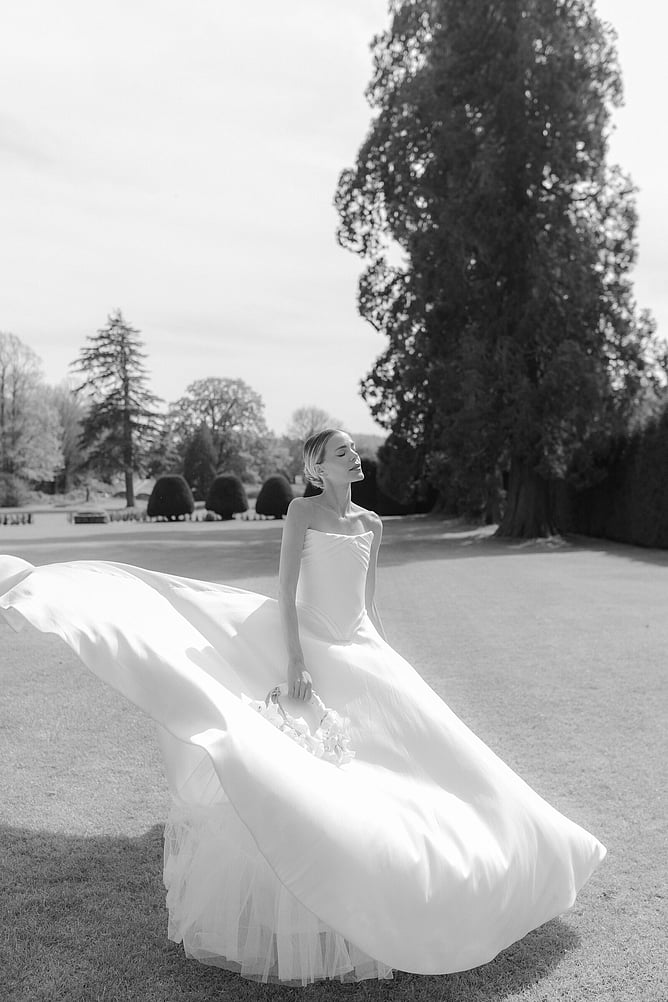
Perhaps the greatest achievement in couture construction is creating a garment that appears completely effortless.
A beautifully shaped neckline may conceal a complex internal foundation. A simple silk gown may depend upon precisely engineered seams and carefully balanced proportions. A dramatic skirt may appear to float around the bride, supported by layers of construction hidden beneath the surface.
The more refined the design, the more important these details can become.
In minimalist bridalwear, there is often nowhere for imperfections to hide.
Without elaborate embellishment or decorative lace, the focus falls entirely on the cut, the fabric and the fit.
This is where technical knowledge and creative instinct become inseparable.
The beauty lies in knowing exactly how much structure is needed and when to allow the fabric to move naturally.
The Craftsmanship Behind Kate Edmondson Bridal Couture
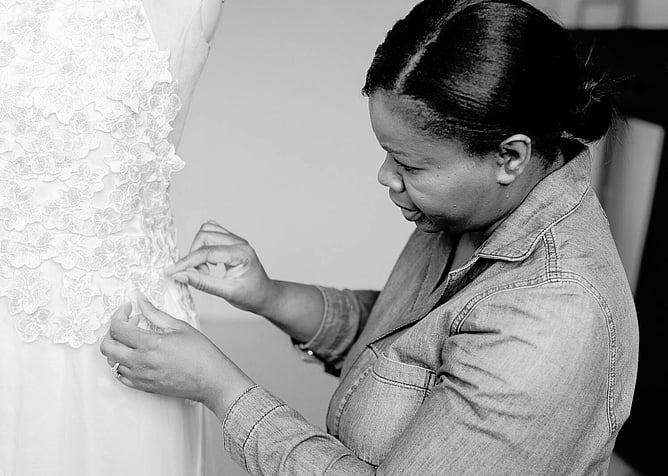
Every bespoke wedding dress I create begins with a conversation.
Understanding the bride, her personal style and how she wants to feel on her wedding day is as important as understanding the technical requirements of the design.
From the initial sketches through to calico development and private fittings, I remain personally involved in the design and fitting process.
The production of each garment is undertaken with a small local team of skilled couture machinists, working from the patterns, specifications and design direction developed throughout the process.
This approach allows me to maintain a close relationship with the construction of each gown, ensuring that the original design vision is carried through to the finished garment.
Traditional couture techniques remain central to my work, but they are always considered in the context of contemporary bridal fashion.
I am particularly interested in creating designs that feel timeless without being conventional gowns with beautiful proportions, thoughtful construction and a modern sensibility.
Whether the design is a dramatic ballgown, a sculptural silk dress or a beautifully tailored bridal ensemble, the same principles apply.
The foundation must be as carefully considered as the finished silhouette.
The Beauty of What Cannot Be Seen
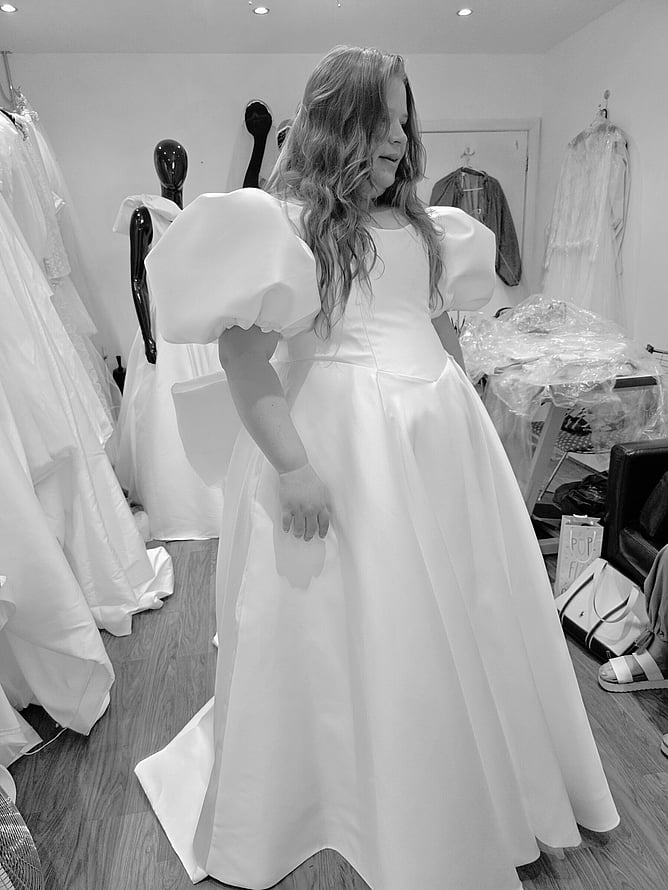
A wedding dress is often remembered for its most visible details.
The neckline. The train. The movement of the skirt. The way the fabric catches the light.
But the elements that make those details possible are frequently hidden from view.
The internal corset supporting the bodice. The carefully developed pattern. The layers beneath the skirt. The subtle adjustments made throughout the fitting process.
These are the quiet foundations of couture.
They represent hours of thought, technical knowledge and craftsmanship, all working together to create something that feels natural and effortless.
For me, the architecture of a wedding dress is where the true artistry of bridal design lies.
Because the beauty of an exceptional wedding dress is not simply what you see it is everything that makes the silhouette possible.
Kate Edmondson Bridal Couture creates bespoke wedding dresses and contemporary bridalwear in West London. Each design is developed through a personal, collaborative process, combining traditional couture craftsmanship with a modern approach to bridal fashion.
Explore our bespoke bridal design service or enquire about a private design consultation at book here